

How to Choose the Best Foam for Your Furniture (Stuff It Upholstery Premium Grade Compared to the Rest)
Want to stop your cushions from going flat way too fast?
Feel free to steal our shop-tested checklist and get it right the first time!
At Stuff It Upholstery, we cut, shape, and rebuild foam every day, for restaurants, bars, hotels, waiting rooms, and living rooms. Foam isn’t “just foam.” Pick the wrong one and you’ll feel it within months. Pick the right one and your furniture feels new again for years.
Fast checklist (use this first)
Seat or back?
- Seat = needs support + durability
- Back = needs comfort + shape
Daily use or occasional?
- Daily = higher density, higher resilience
- Occasional = medium density can work
How firm do you like it?
- Firmness is usually “ILD” (how hard it feels)
- Density is “how long it lasts”
Thickness matters
- Thin foam needs better quality to avoid “bottoming out”
If you want us to cut foam to your exact size, start here: Stuff It Upholstery custom cut foam
https://stuffitupholstery.com/custom-cut-foam-rubber
Foam basics (no fluff)
Density = lifespan
Density is measured in PCF (pounds per cubic foot). Higher PCF usually lasts longer.
- ~1.5–1.8 PCF: budget foam, quicker breakdown
- ~2.0–2.5 PCF: solid middle, decent durability
- 2.5+ PCF: premium durability for everyday seating
- HR (High Resilience) can feel “springier” and holds shape better even at similar densities
In real life: density is what keeps your cushion from turning into a pancake.
Firmness (ILD) = feel
ILD is how firm the foam feels when you sit.
- Low ILD: softer, sinks more
- Mid ILD: balanced
- High ILD: firm, supportive
Important: You can have soft foam that lasts (higher density + lower ILD). And you can have firm foam that still fails early (low density + higher ILD).
What “premium grade” means at Stuff It Upholstery (and how to compare)
Want to compare foams without guessing?
Feel free to ask for density and what it’s built for!
At Stuff It Upholstery, when we recommend our premium grade foam, we’re targeting the stuff that matters in the real world:
- Better shape retention (less sag, less “butt print”)
- Better durability under daily use
- More consistent cuts for cleaner edges and better fit
- Better recovery after long sits (especially on commercial seating)
Here’s the simple way to compare any foam you’re considering:
Ask these 4 questions
- What’s the density (PCF)?
- What’s the firmness (ILD) for the seat layer?
- Is it standard poly or HR (high resilience)?
- Is it meant for heavy traffic seating?
If a seller can’t answer those, it’s usually not premium. It’s mystery foam.
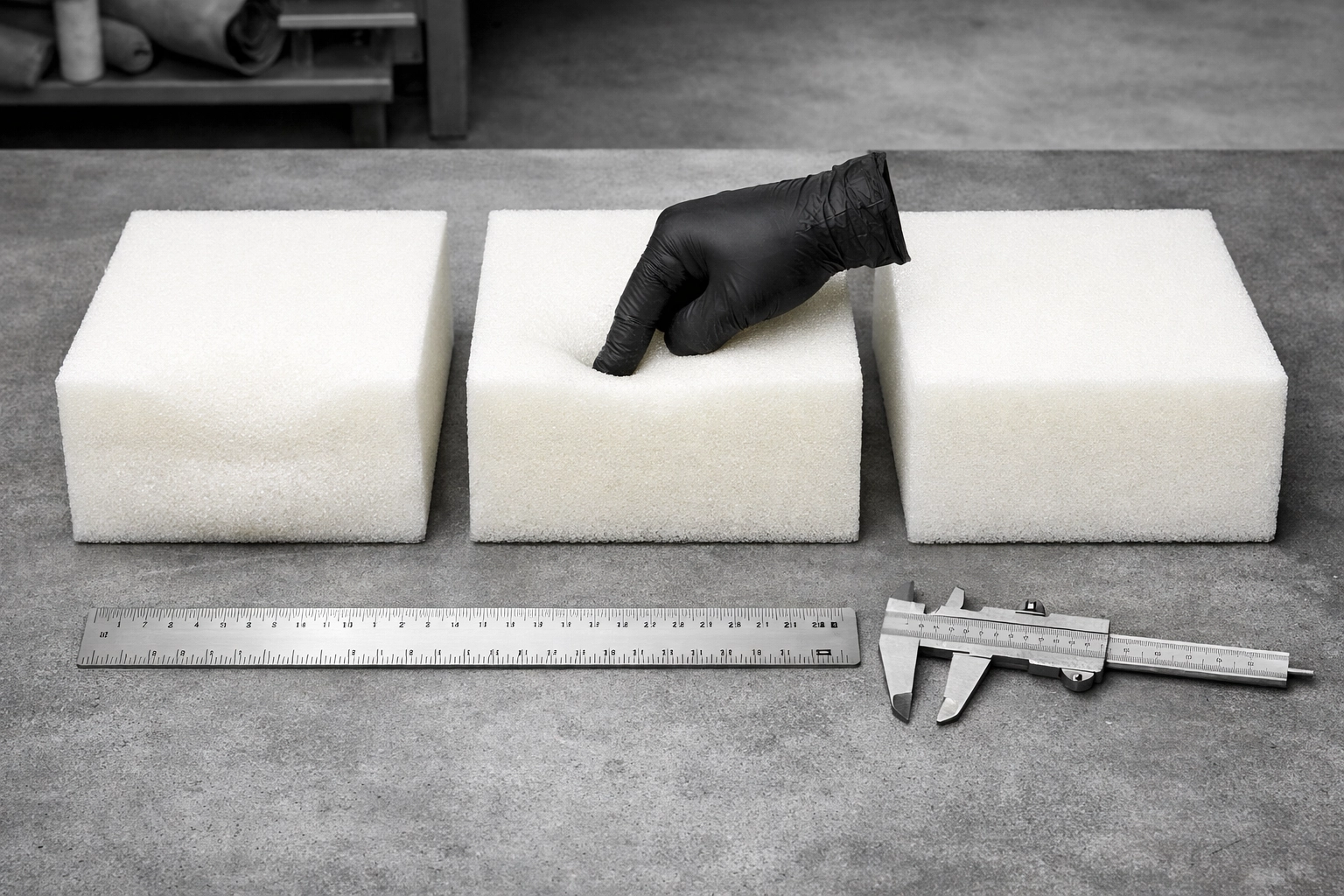
Match the foam to the furniture (quick picks)
Sofas + sectionals (residential)
Want your couch to feel good today and next year?
Feel free to prioritize the seat foam over everything else!
Best practice (what we do at Stuff It Upholstery):
- Seat cushions: premium/high-density or HR foam core
- Wrap: Dacron wrap to soften edges and reduce fabric abrasion
- Back cushions: softer foam or blended fill depending on the style
Common mistake: replacing only the cover.
If the foam is tired, a new cover won’t fix the “sink.”
Tip: If your cushion has a thin seat deck (like modern low-profile sofas), you need higher-quality foam or you’ll bottom out fast.
Need examples of our rebuild work? Gallery:
https://stuffitupholstery.com/gallery
Dining chairs + accent chairs
Want to make a chair comfy without making it tall and awkward?
Feel free to use thinner foam, but better quality!
- Dining seats are often 1–2 inches thick
- Thin foam must be durable, or it compresses quickly
- Add a light wrap to reduce “hard edge” feel
Window seats + bench cushions
Want a bench that doesn’t feel like plywood?
Feel free to go thicker and firmer!
- Thickness often 3–5 inches
- Firmer foam helps with long spans and prevents sag
- Great place for premium foam because benches get used hard
Commercial seating: bars, restaurants, waiting rooms
Want your commercial seating to stop looking worn halfway through the year?
Feel free to treat foam like a “wear item,” not an afterthought!
At Stuff It Upholstery, we see the same pattern: commercial furniture fails from the inside out. The fabric might still look decent, but the foam collapses and the seat feels dead.
Commercial reality check
- High traffic = thousands of sits per week
- People sit hard and fast
- Spills happen
- Cleaning is frequent
What works best
- Higher density foam and better resilience
- Firmness tuned to prevent bottoming out
- Consistent builds across all booths/chairs so the whole room feels uniform
Booths + banquettes
- Long runs need foam that doesn’t “dish” in the middle
- A firmer spec usually wins here
- Proper backing and padding layers matter too (we handle the whole build)
Want to see projects and client stories? Videos:
https://stuffitupholstery.com/videos
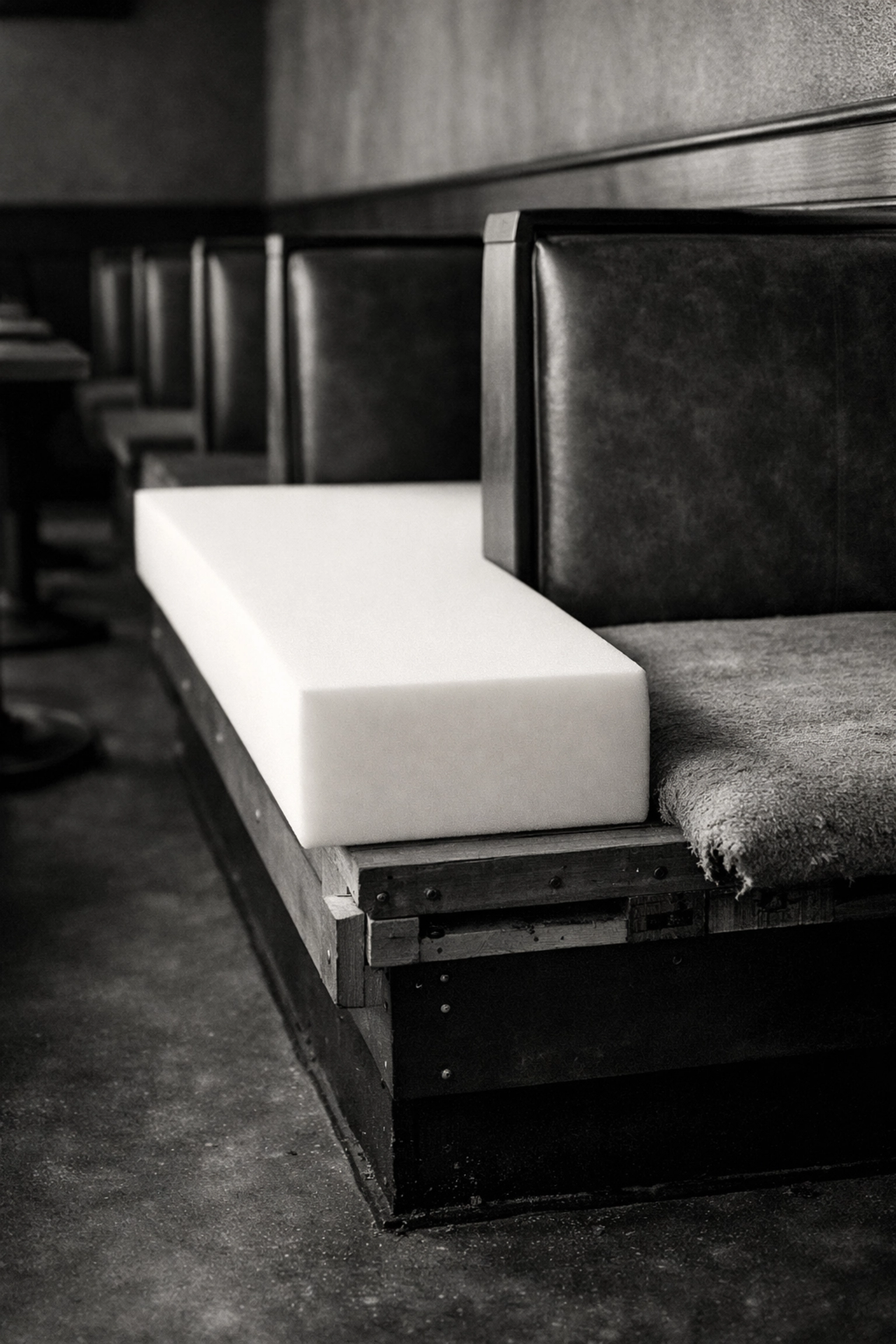
“Automotive-grade” foam for home furniture (yes, it’s a thing)
Want home seating that holds up like it’s built for daily grind?
Feel free to ask us about automotive-grade foam for residential use!
Quick note: we’re talking about foam quality, not automotive upholstery.
Why it helps at home:
- Excellent resilience (bounces back better)
- Built for repeated compression
- Great for busy households (kids, pets, guests, movie nights)
- Great for “favorite seat” syndrome (one spot gets all the use)
Where we like it:
- Sofa seats that get hammered daily
- Bench cushions in kitchens and mudrooms
- Family room sectionals
- Rental properties where durability matters more than “cloud soft”
If you want “soft,” we can still do soft. We just build it with foam that recovers instead of foam that quits.
Don’t forget the wrap layer (it’s not optional)
Want your cushions to look smoother and feel nicer right away?
Feel free to add a wrap!
A Dacron wrap (or similar batting) does a few big things:
- Softens the surface feel
- Rounds edges for a more finished look
- Reduces fabric abrasion from sharp foam corners
- Helps the cover slide on cleaner
This is one of the easiest upgrades Stuff It Upholstery recommends when customers want that “new furniture” look.
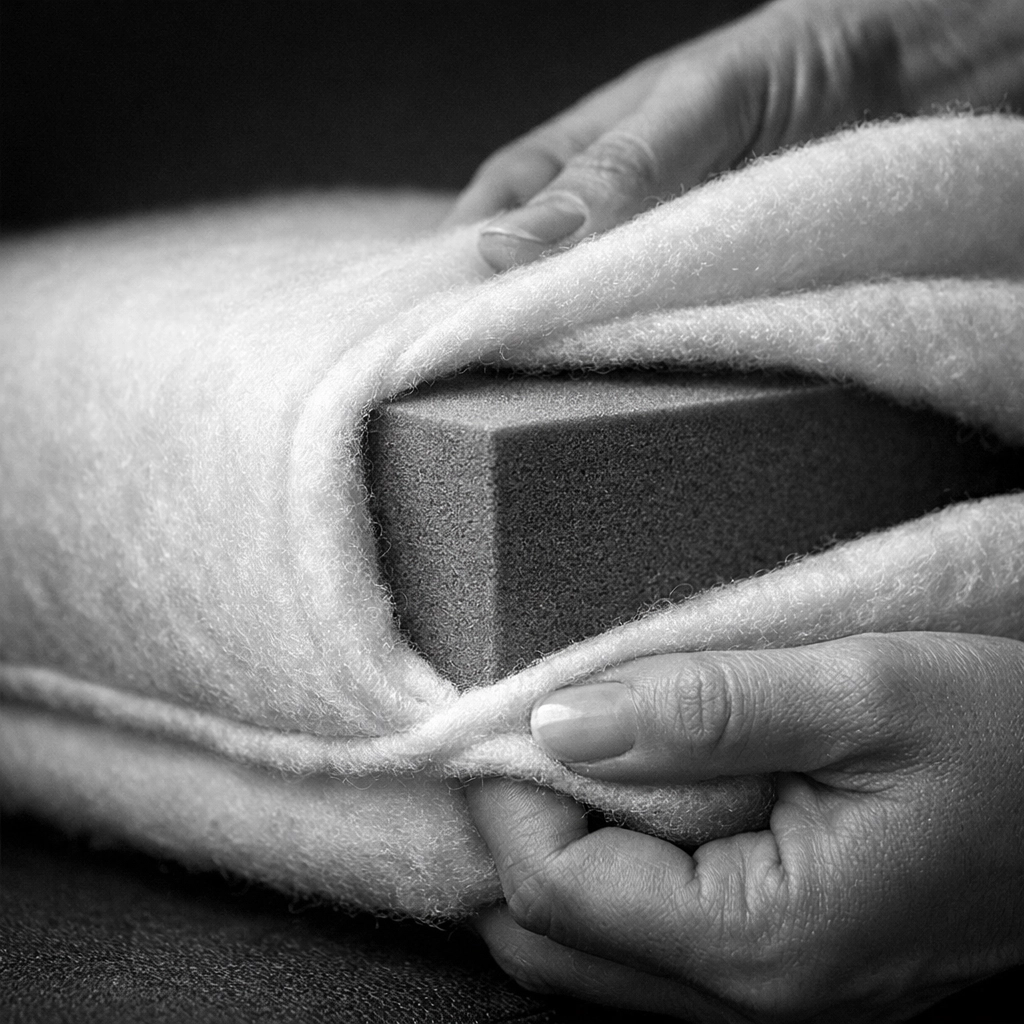
Foam types you’ll run into (and what they’re for)
Want a simple “what should I buy?” map?
Feel free to use this and ignore the confusing listings online!
Standard polyurethane foam
- Affordable
- Fine for light use
- Breaks down faster under daily seating
High-density polyurethane foam
- Better durability
- Great for most seat cushions
- Better value long-term
HR (High Resilience) foam
- More “spring” and recovery
- Holds shape better
- Great for premium seating and high-use zones
Specialty foam (outdoor, moisture-prone areas)
- Some foams drain better, some resist water differently
- If it’s near pools, patios, or heavy moisture, ask before you buy
If you’re unsure, Stuff It Upholstery can recommend the right type based on use and comfort goal: not just a random “firm/soft” label.
Measuring and ordering foam (do it like a pro)
Want foam that fits without wrestling it for an hour?
Feel free to measure twice and order once!
Measure these
- Length and width across the foam, not the cover
- Thickness (important!)
- Corner style (square vs. rounded)
- Cushion style (boxed vs. knife edge vs. T-cushion)
Pro tip
- Foam is usually cut slightly oversized depending on the cover style and how “full” you want it to look. We can guide that.
If you want us to handle the cuts and matching, contact Stuff It Upholstery:
https://stuffitupholstery.com/contact
Stuff It Upholstery premium grade vs “the rest” (what you’ll notice)
Want the quick, real-world difference?
Feel free to focus on what you can actually feel!
With premium-grade foam from Stuff It Upholstery, you’ll notice:
- Seats feel supportive longer
- Less sagging at the front edge
- Better rebound after long sits
- Cleaner cushion lines (especially with wraps)
- More consistent comfort across multiple pieces (huge for restaurants)
With cheaper foam, you’ll notice:
- Early soft spots
- “Hammock” feeling
- Bottoming out
- Lumpy edges where the foam breaks down first
If you’re rebuilding commercial seating, this difference shows up fast. If you’re rebuilding your sofa, you’ll feel it every single night.
When to replace foam (signs it’s done)
Want to know if it’s the fabric or the foam?
Feel free to check these signs!
Replace foam if you see:
- Cushion looks flat even after fluffing
- You feel the frame or base
- Foam crumbles, cracks, or stays compressed
- One seat is way softer than the rest
- You’re folding blankets under cushions (we see it all the time)
For restoration work beyond foam: frames, padding builds, full reupholstery: see:
https://stuffitupholstery.com/upholstery-services
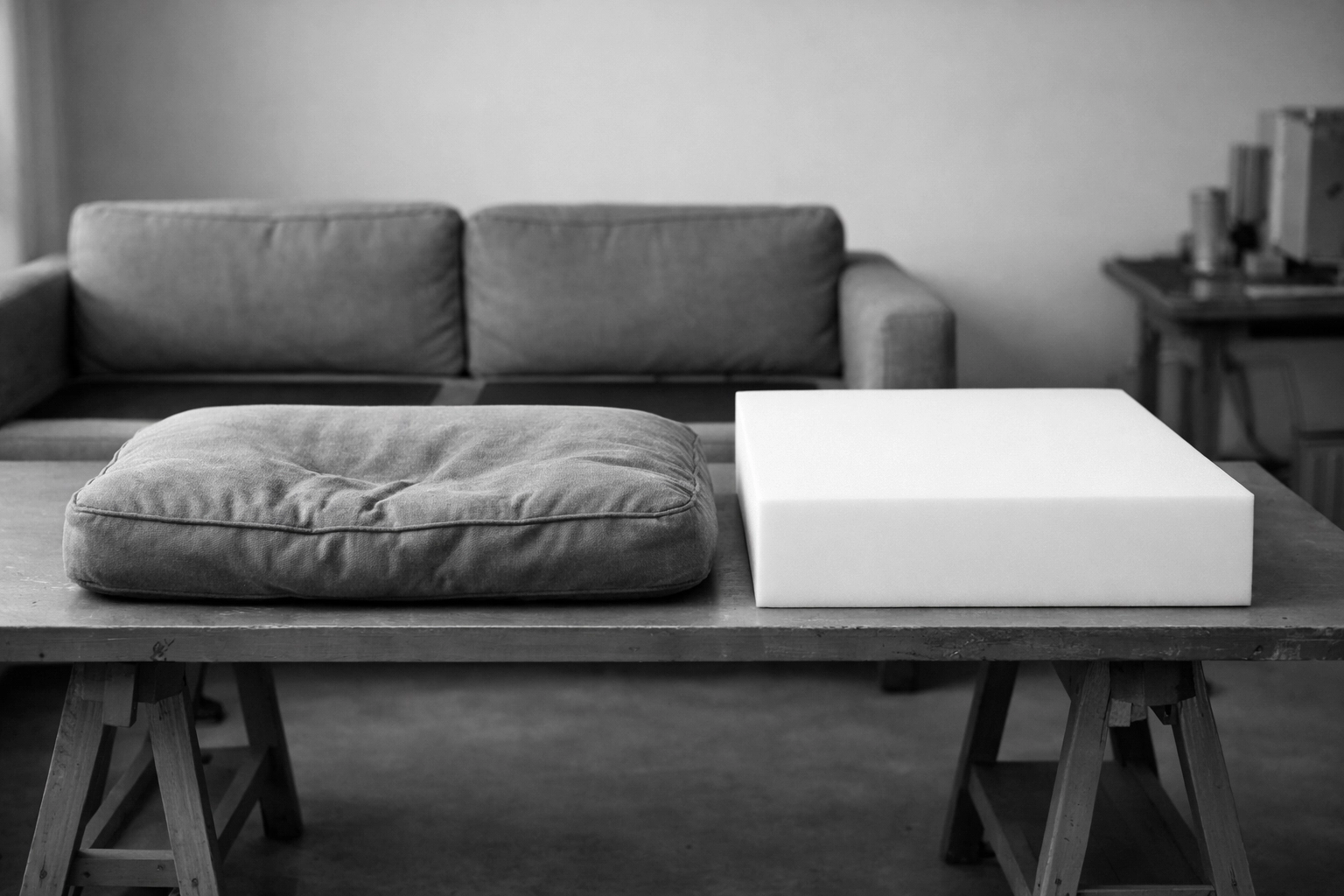
Quick “tell us what you need” prompt (copy/paste)
Want the fastest recommendation from Stuff It Upholstery?
Feel free to send this!
Use
- Residential sofa / bench / dining chairs / restaurant booth / bar stools
Feel - Soft / medium / firm
Use level - Occasional / daily / commercial heavy traffic
Dimensions - L x W x T for each cushion
Notes - Bottoming out? Back pain? Want it taller?
Testimonials if you want reassurance before you commit:
https://stuffitupholstery.com/testimonials

